
 |  |  |  |
|---|
Age Groups & Learning Pathways
How We Support Children as They Grow
At Kids Planet Academy, each age group has its own rhythm, needs and wonders. Our learning environments, teaching practices and relationships are all guided by our belief that children are capable learners, that relationships matter, and that play, environment and community shape meaningful learning.


Babies
(0 -18 months)
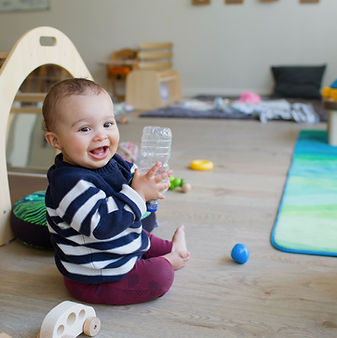

Secure Beginnings, Gentle Exploration
Our baby environment is designed to feel calm, nurturing and predictable. At this early stage, relationships come first — every baby has a consistent primary educator who builds warm, trusting connections and responds closely to their cues.
We see babies as capable, curious learners, even in their earliest months. Learning begins through sensory exploration, simple play experiences and gentle interactions. Educators observe each baby carefully, listening to their signals and responding with thoughtful, responsive teaching that reflects who they are and what they need.
The room itself acts as an invitation to explore. Soft textures, natural light, and open spaces create an environment that supports early movement and discovery — because we believe the environment is a teacher, even for the youngest children.
Family partnerships are especially important in this stage. We work closely with families to align routines, honour cultural values and ensure each child feels a deep sense of belonging and wellbeing.
Toddlers
(18 Months - 3 years)
Growing Independence, Big Emotions & Big Discoveries
Toddlers learn through motion, repetition, imitation and play — and our toddler environments are rich in opportunities for active exploration. Because play is powerful, we design experiences that let toddlers build language, practise problem-solving, experiment with materials and express their emerging ideas.
Toddlers are also developing independence and agency. We encourage self-help skills, offer choice throughout the day, and support their growing confidence with calm, consistent guidance. Educators use responsive, evidence-informed practice to help toddlers navigate big feelings, social interactions and new challenges.
We continue to see toddlers as capable thinkers, not passive learners. Their questions, observations and interests help shape the curriculum. Educators listen closely, follow children’s emerging ideas and extend learning through intentional interactions.
Our spaces are set up to promote exploration — open shelving, safe climbing challenges, loose parts, nature items and real-life materials. The environment encourages curiosity while providing routines that help toddlers feel secure and grounded.
Families remain valued partners. Together, we create continuity between home and the centre so toddlers experience a strong sense of belonging.


Preschool / Kindergarten (3 – 5 years)


Confident Learners Ready for the Next Step
In the preschool years, children become imaginative thinkers, problem-solvers and collaborators. Our preschool program embraces this stage with rich play experiences, open-ended investigations and meaningful projects that draw on children’s ideas. We view them as capable, creative learners who drive their own learning journeys.
Educators use intentional, reflective and research-informed practice to support early literacy, numeracy, science, creativity and social development. They listen carefully to children’s theories, questions and interests, designing learning opportunities that extend thinking and encourage collaborative inquiry.
Our spaces reflect our belief that the environment is a teacher — with areas for construction, art, storytelling, dramatic play, nature exploration and group learning. Outdoors, children experience challenge, risk, problem-solving and connection to the natural world.
Because the real world is our classroom, preschoolers participate in excursions, community connections, nature walks and real-life experiences that deepen their understanding of people, places and community life.
We focus strongly on wellbeing, resilience and emotional intelligence. Children are encouraged to express themselves, take responsibility, make decisions and develop confidence in who they are — supporting a strong sense of agency and belonging.
Families remain essential partners as we prepare children for a confident, supported transition to school.

